
Sculptural Legacy Program
Presbyterian Healthcare Services
This proposal outlines a long-term sculptural initiative for Presbyterian Healthcare Services, grounded in the lived experience of practicing medicine from within the organization.
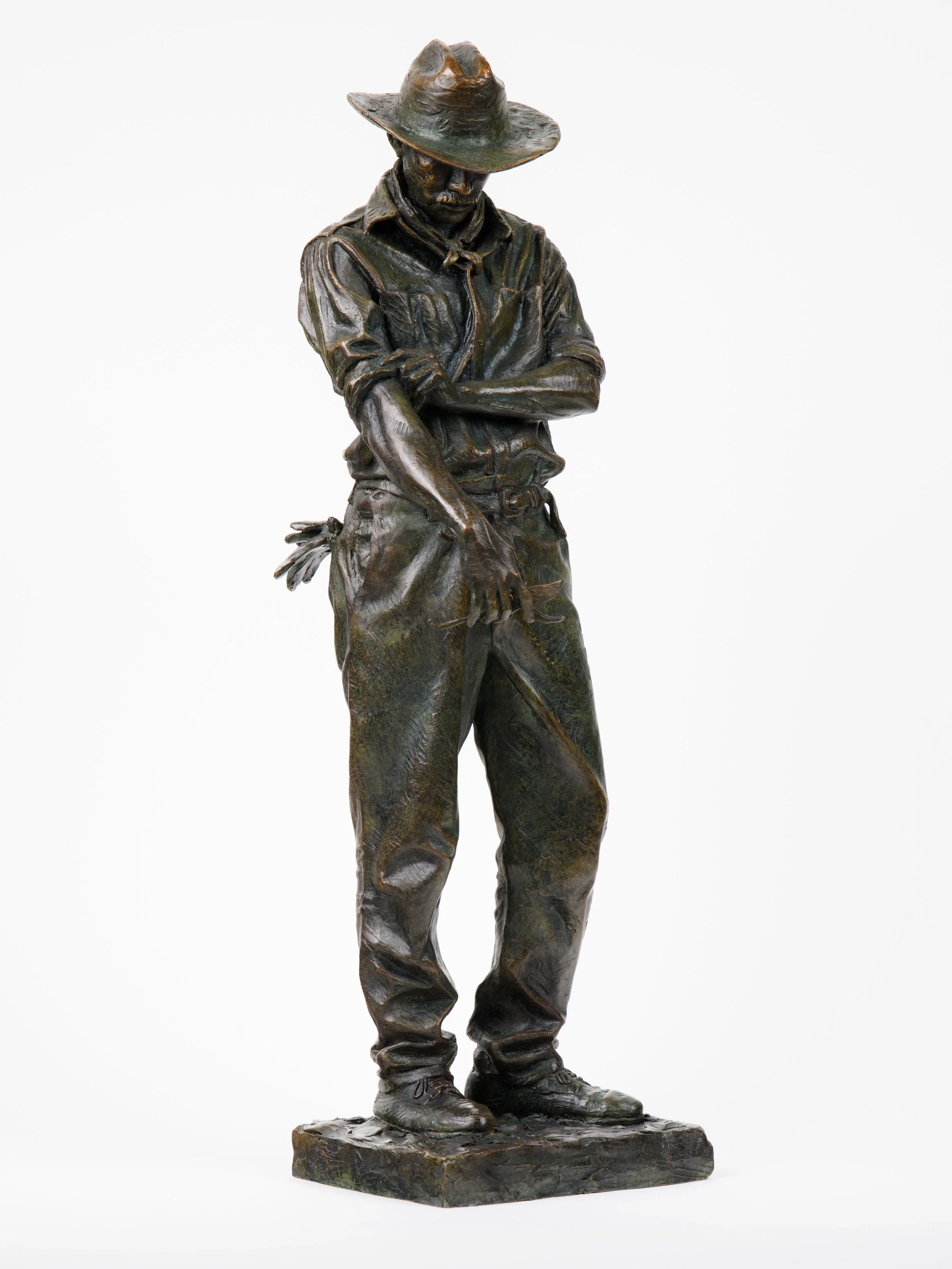
The intention is not to represent medicine symbolically, but to reflect the reality of care as it is experienced over time.
Historically, the most enduring figurative works are not defined by heroism, but by presence.
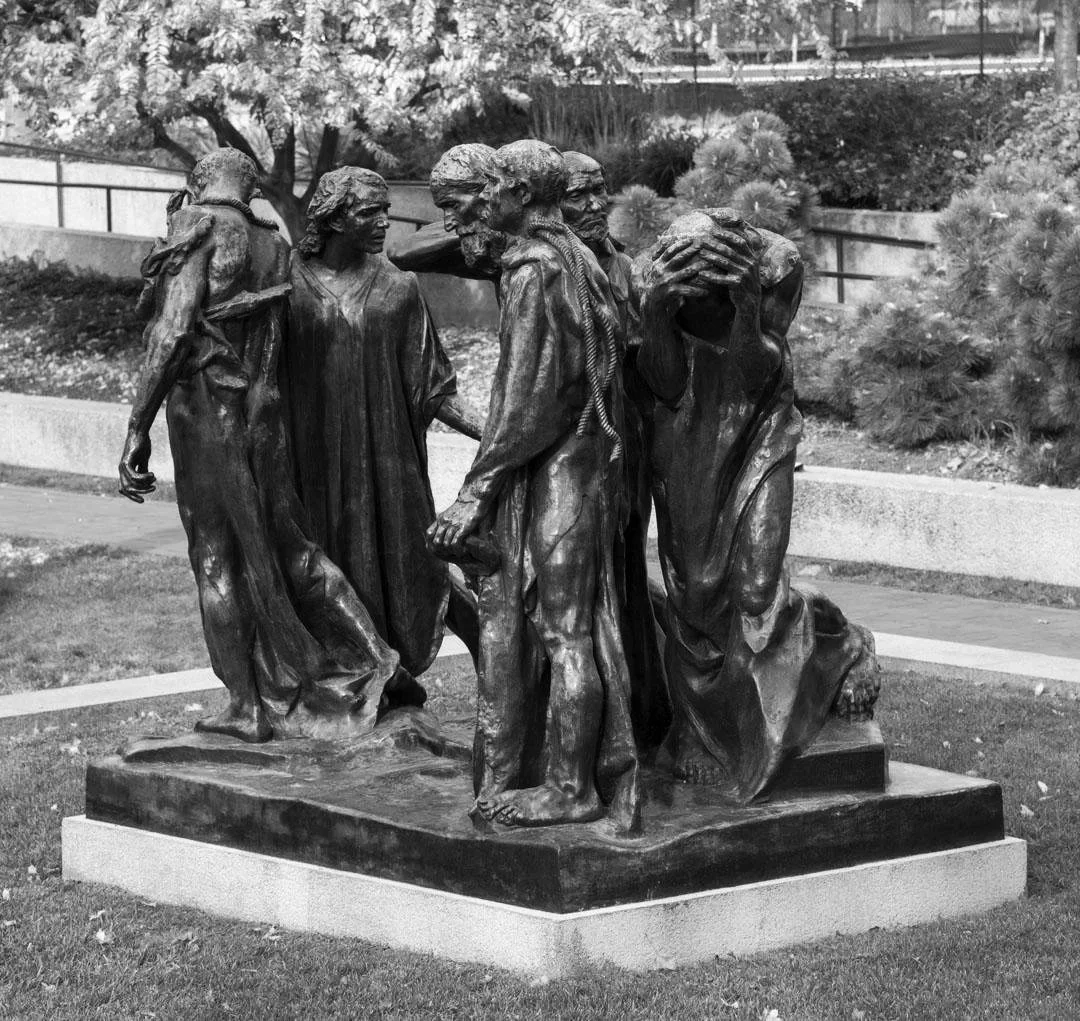
The Burghers of Calais is a useful reference point. The figures are not elevated or idealized. They stand in a moment of weight and continuation, grounded in the reality of what they carry.
This proposal draws from that lineage—work that is human, specific, and recognizable without explanation.
PERMANENT INSTALLATION
The central idea is to create a body of sculptural work grounded in the lived experience of medicine.
These initial sketches are not finished designs, but a way of establishing direction. They are meant to explore posture, gesture, and presence rather than obvious symbolic representation.
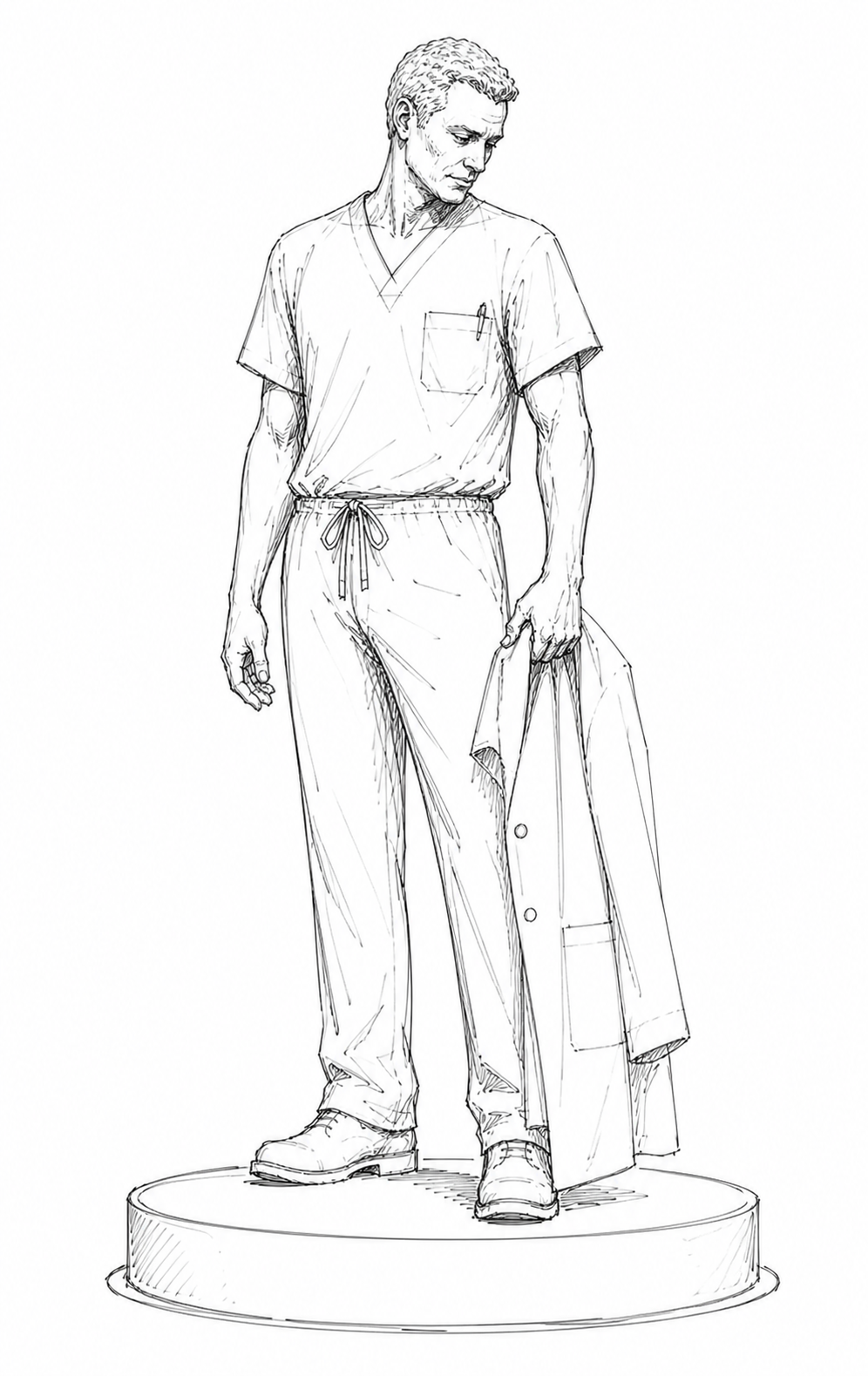
A permanent bronze installation, placed at a key Intermountain campus.
The figure is intended to feel grounded, attentive, and recognizable to those within medicine.
The posture suggests a life shaped through repetition, responsibility, and attention to others.
The work is intended to feel familiar to those within medicine without relying on symbolism or explanation.
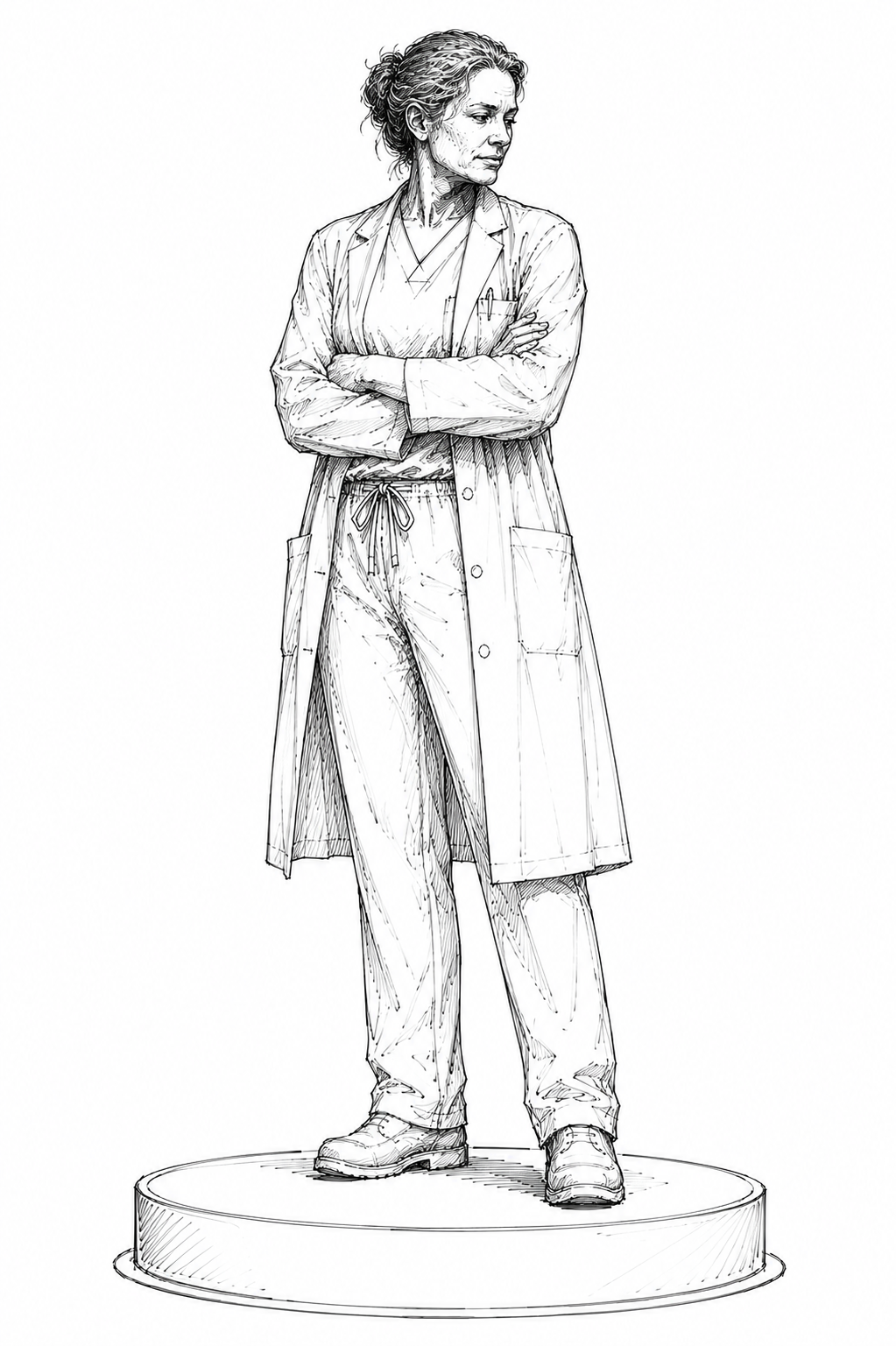
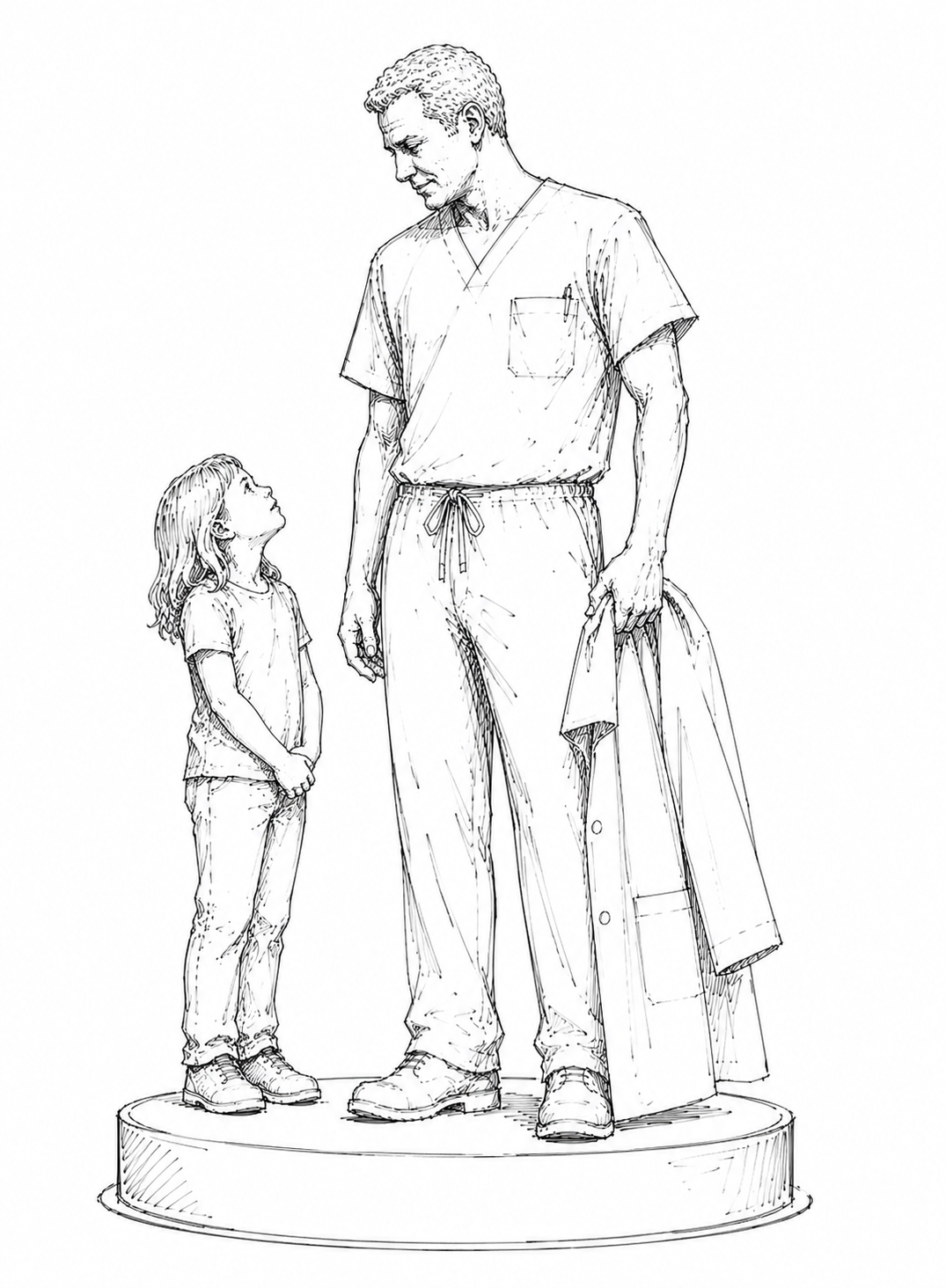
A second direction explores a quieter moment, care expressed through proximity and attention.
The figure is oriented toward another presence, implied but not depicted.
This approach shifts the focus away from identity and toward attentiveness, presence, and care expressed through ordinary human interaction.
LEGACY SERIES
In addition to a permanent installation, this proposal includes an ongoing series of smaller bronze works.
These would be presented to physicians at retirement or significant career milestones.
Rather than a fixed object repeated indefinitely, the series could evolve gradually over time—allowing each period to carry its own form while maintaining continuity across the institution.
The intent is to create something lasting and physical that acknowledges a life in medicine in a way that traditional forms of recognition cannot.
Over time, this initiative creates continuity across the system and reinforces a culture that values long-term commitment.
It establishes a visual and physical identity grounded in lived experience, rather than abstraction.
It offers a way to recognize physicians not only for what they have done, but for how they have lived their work.
Initial steps would include entering a concept development phase that introduces both a permanent installation and a small group of legacy pieces, allowing the program to begin taking shape and be evaluated over time.
Phase I: Concept Development
The initial phase would focus on refining the sculptural direction and establishing the broader framework of the program.
Over a six week period, this phase would include:
• Development of multiple sculptural directions
• Refined sketches and photographic reference studies
• Preliminary scale and site considerations
• Initial monument and fabrication planning
• Timeline and budget framework for production
• Early development of the legacy series structureThe goal of this phase is not to finalize a monument, but to establish a cohesive sculptural language and long-term vision for the program.