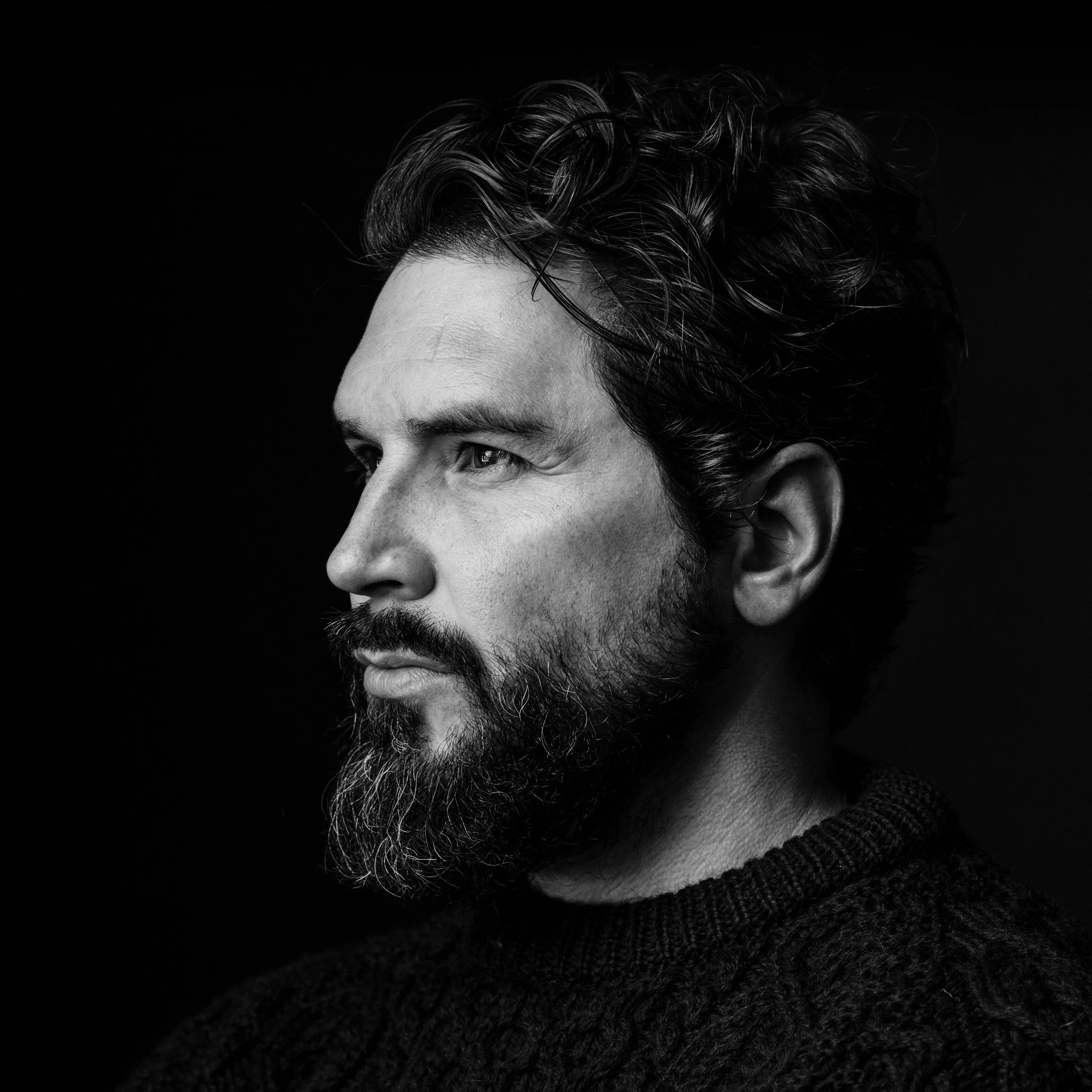
Eric Overton is an American artist working in sculpture and photography whose work explores how images, forms, and landscapes shape the mythology and cultural memory of the American West.
Artist Statement
My work investigates how images, forms, and landscapes shape cultural memory in the American West. Across sculpture and photography, I am interested in how form emerges through time, environment, and human intervention, and how acts of representation influence what is remembered, believed, and mythologized.
Working with both contemporary photographic processes and nineteenth-century wet plate collodion, I photograph landscapes, figures, animals, and found objects whose meaning has been shaped by erosion, labor, displacement, and cultural imagination. In parallel, my sculptures often originate from historical imagery, narrative, lived encounters, or natural forms, translating these sources into bronze while preserving the gestures and textures of their making.
Much of my work explores the tension between documentation and construction. Photographs and monuments often appear to preserve history, yet they also participate in shaping the narratives through which that history is understood. By moving between photography and sculpture, I examine how acts of representation—whether recording a landscape, staging an image, or translating a photograph into bronze—both document the world and actively construct meaning, and ultimately myth.
Biography
Eric Overton is an American artist working in sculpture and photography whose work explores how images, objects, and landscapes shape the mythology and cultural memory of the American West. His practice moves between contemporary photographic processes and nineteenth-century wet plate collodion alongside figurative and conceptual bronze sculpture. Through these mediums, Overton investigates how representation—through photographs, monuments, and cultural imagery—has shaped the way the West is remembered, understood, and mythologized.
Much of his work engages the tension between historical narrative and lived reality in the Western landscape. Raised in the American West and a distant relative of frontier figure Doc Holliday through his mother’s Holladay family line, Overton developed an early fascination with the region’s mythology and the role imagery has played in shaping it. His sculptures often originate from historical photographs or lived encounters, translating these sources into bronze while preserving the gestures and textures of their making. His photographic work includes the ongoing Wild America series of wet plate collodion landscapes alongside bodies of work examining wildlife, portraiture, and forms shaped by time and human presence.
Before fully pursuing his artistic practice, Overton worked as a physician while simultaneously directing documentary films exploring photography, landscape, and preservation in the American West. At the age of twenty he worked as a photographer for Rolling Stone Magazine, an early experience that helped shape his interest in image-making and cultural narrative.
Overton lives and works in Utah.
-
2026 102nd Annual Spring Salon, Springville Museum of Art, Springville, Utah
2024, As the Lake Fades, Utah Museum of Contemporary Art. Salt Lake City, Utah UMOCA
2024, Lake Effect, Modern West Fine Art, Salt Lake City, Utah
2023, Formal Elements, Modern West Fine Art, Salt Lake City, Utah
2021 Earth, Modern West Fine Art, Group Artist Exhibition, Salt Lake City, Utah
2020 96th Annual Spring Salon, Springville Museum of Art, Springville, Utah
2019 Western Gothic, Altamira Fine Art, Solo Artist Exhibition, Jackson Hole, Wyoming
2019 95th Annual Spring Salon, Springville Museum of Art, Springville, Utah
2018 Monument, Utah Museum of Contemporary Art, Salt Lake City, Utah
2017 Wild America, Modern West Fine Art, Solo Artist Exhibition, Salt Lake City, Utah
2016 Bronze Sculpture, Group Show, MTFA Contemporary, Santa Fe, New Mexico
2014 Bronze Sculpture, Group Show, Julie Nester Gallery, Park City, Utah
2008 Selected Works & Medicine Dogs Film Screening, Le Atelier, Salt Lake City, Utah
2008 Transcribed, Installation, Body Worlds Exhibition, Traveling Exhibit
2008 Transcribed, University of Utah, Salt Lake City, Utah
2008 Transcribed, Two Artist Exhibition, Phillips Gallery, Salt Lake City, Utah
2006 Absinthe Series, Solo Exhibition, Ampersand Gallery, Salt Lake City, Utah
2006 Shoes, Group Exhibition, La Galería Arte y Diseño, Málaga, Spain
2005 Underwater Nudes, Solo Exhibition, Ampersand Gallery, Salt Lake City, Utah
2005 Orchids, Solo Exhibition, Ampersand Gallery, Salt Lake City, Utah
2004 Oaxaca, Solo Exhibition, Ampersand Gallery, Salt Lake City, Utah
2004 Desnudos y Arquitectura, Solo Exhibition, La Galería Arte y Diseño, Málaga, Spain
-
Permanent Collection: State of Utah Alice Merrill Horne Collection
Permanent Collection: University of New Mexico, CSWR UNM Libraries
-
2023 Collodion: The Process of Preservation, Rhode Island School of Design, Providence, Rhode Island
2022 Collodion: The Process of Preservation, St. John’s College, Santa Fe, New Mexico
2021 Collodion: The Process of Preservation, National Gallery of Art, Washington DC
2020 Collodion: The Process of Preservation, Park City Film, Park City, Utah
2020 Collodion: The Process of Preservation, Utah Film Center, Salt Lake City, Utah
2020 Collodion: The Process of Preservation, Glimmerglass Film Days, Cooperstown, New York
2020 Collodion: The Process of Preservation, Utah Film Festival, Salt Lake City, Utah
2020 Collodion: The Process of Preservation, Newport Beach Film Festival, Newport Beach, California
2020 Collodion: The Process of Preservation, The DC Environmental Film Festival, Washington DC
-
Utah filmmaker learned the value of listening while shooting Collodion, Park Record, September 24, 2020
Reset and Calibrate: Española Physician Documents Wilderness Journey in Collodion, Albuquerque Journal, September 18, 2020
The New Face of Healthcare: Utah Business Magazine, November 2018 Healthcare Heroes: Utah Business Magazine, September 2018
Into the Field, Western Art & Architecture, December 2017/January 2018 Wild America: Process & Preservation,
Lenswork, issue #130 May/June 2017 Big Nature: Eric Overton’s Photographs of National Parks, Salt Lake Magazine, May 2017
-
Fine Art Connoisseur Award
102nd Springville Salon, Springville Museum of Art, 2026Best Feature Documentary Film
Collodion: The Process of Preservation, Utah Film Festival, 2020